
Midcoast Wall & Floor Tiling
Kitchen Tiling in Coffs Harbour
Servicing the entire Coffs Coast and surrounds, we focus on doing the job right, delivering quality tiling and waterproofing that adds lasting value to your space.
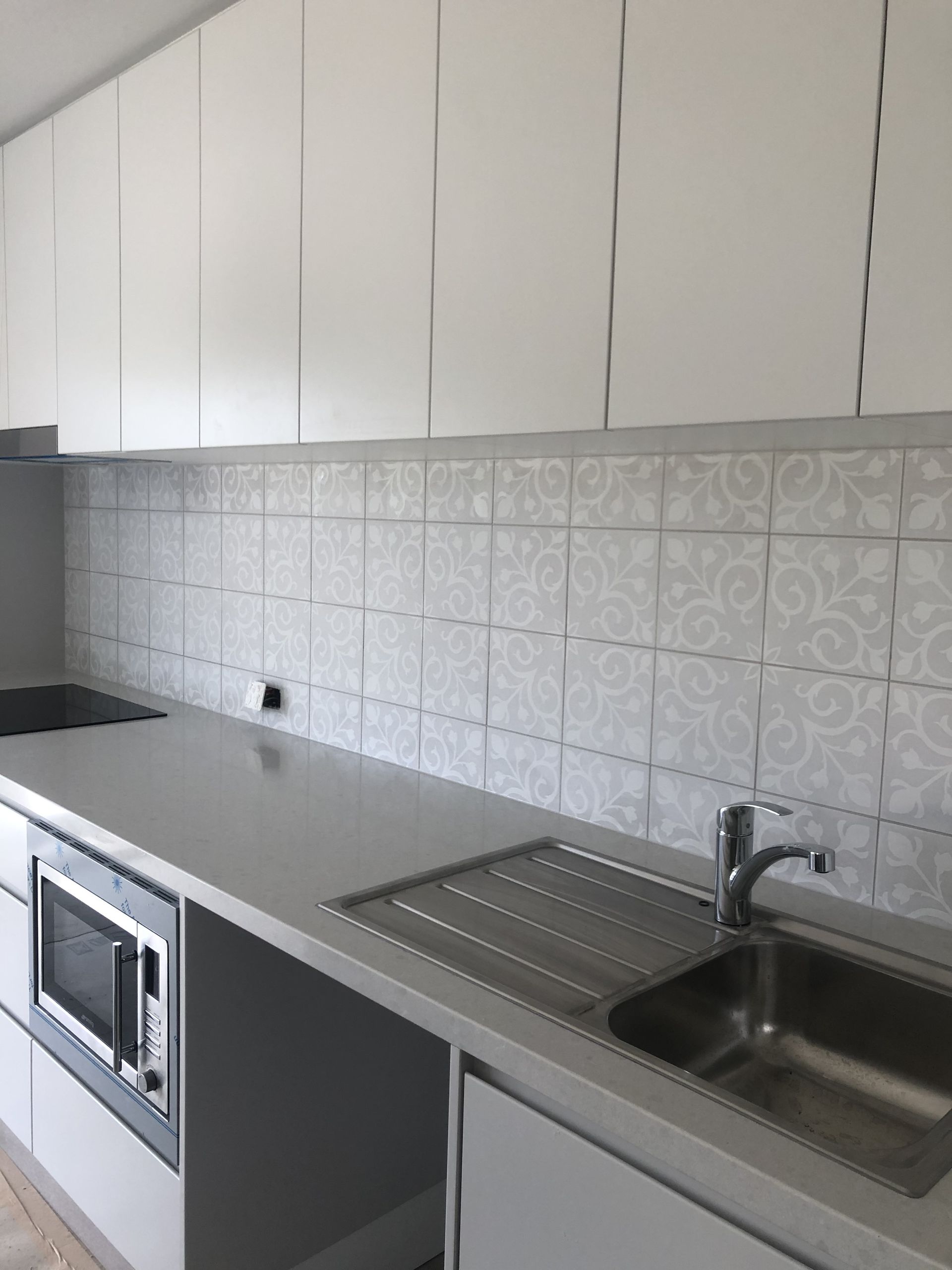
Kitchen Tiling
The Finishing Touch That Matters
A kitchen can look brand new or completely outdated based on the tiles alone. Splashbacks and floors do more than fill space. They tie the cabinetry, benchtops and appliances together.
At Midcoast Wall & Floor Tiling, we provide professional kitchen tiling in Coffs Harbour, helping homeowners and builders create kitchens that are both practical and appealing. Kitchens are high-use areas. Between cooking, cleaning and daily traffic, surfaces need to handle heat, moisture and constant activity. Careful planning ensures tiles not only match the design but also perform long term. When spacing, alignment and surface preparation are handled properly, the finished result feels sharp, solid and built to last.
If you are planning kitchen tiling in Coffs Harbour and want a finish that brings the whole space together, call 0402 278 450 to organise your free quote.
Need Help?
Frequently Asked Questions
What is the best tile for a kitchen splashback?
The best tile for a kitchen splashback depends on the overall design and how much maintenance is preferred. Porcelain and ceramic tiles are popular because they are durable, easy to clean and resistant to heat and moisture. Gloss finishes can reflect light and make smaller kitchens feel more open, while matte finishes offer a softer look. Larger tiles mean fewer grout lines, which can reduce cleaning time. The most important factor is choosing tiles that are suitable for wall installation and positioned correctly behind cooking areas.
Should kitchen floor tiles be different from wall tiles?
Yes, in most cases, kitchen floor tiles should be specifically rated for floor use. Floor tiles are thicker and more durable than wall tiles and are designed to handle weight and foot traffic. Slip resistance is also an important consideration, particularly in busy households where spills are common. Wall tiles, including splashback tiles, are often lighter and more decorative. Using the correct tile type for each surface helps ensure safety and long-term durability.
How high should a kitchen splashback go?
A kitchen splashback typically runs from the benchtop to the underside of overhead cabinets. In some designs, tiles may extend to the ceiling, especially behind a rangehood or in kitchens without upper cabinetry. The height often depends on the layout and overall design preference. Extending tiles higher can create a bold feature, while a standard height offers a clean and practical finish that protects walls from moisture and cooking splatter.
Send Us a Message
Contact Us
Thank you for contacting Midcoast Wall & Floor Tiling.
We will get back to you as soon as possible.
Oops, there was an error sending your message.
Please try again later.
Why Choose Us
Smart Style Choices
Kitchens are one of the hardest-working rooms in any home. Splashbacks protect walls from heat, grease and moisture, while floor tiles need to cope with spills, foot traffic and heavy appliances. That is why installation quality matters just as much as tile choice.
Large-format tiles can create a seamless, modern look with fewer grout lines to maintain. Patterned or textured splashbacks can add personality without overwhelming the space. The key is balancing design with practicality. Tiles should be easy to clean, resistant to staining and suited to the layout of the room.
Attention to detail around corners, cabinetry, rangehoods and island benches ensures the final result looks intentional rather than pieced together. When installed properly, kitchen tiling becomes a feature of the room rather than just a background surface. If you are renovating or building, choosing a well-planned kitchen tiling layout helps create a space that looks cohesive and performs reliably every day.
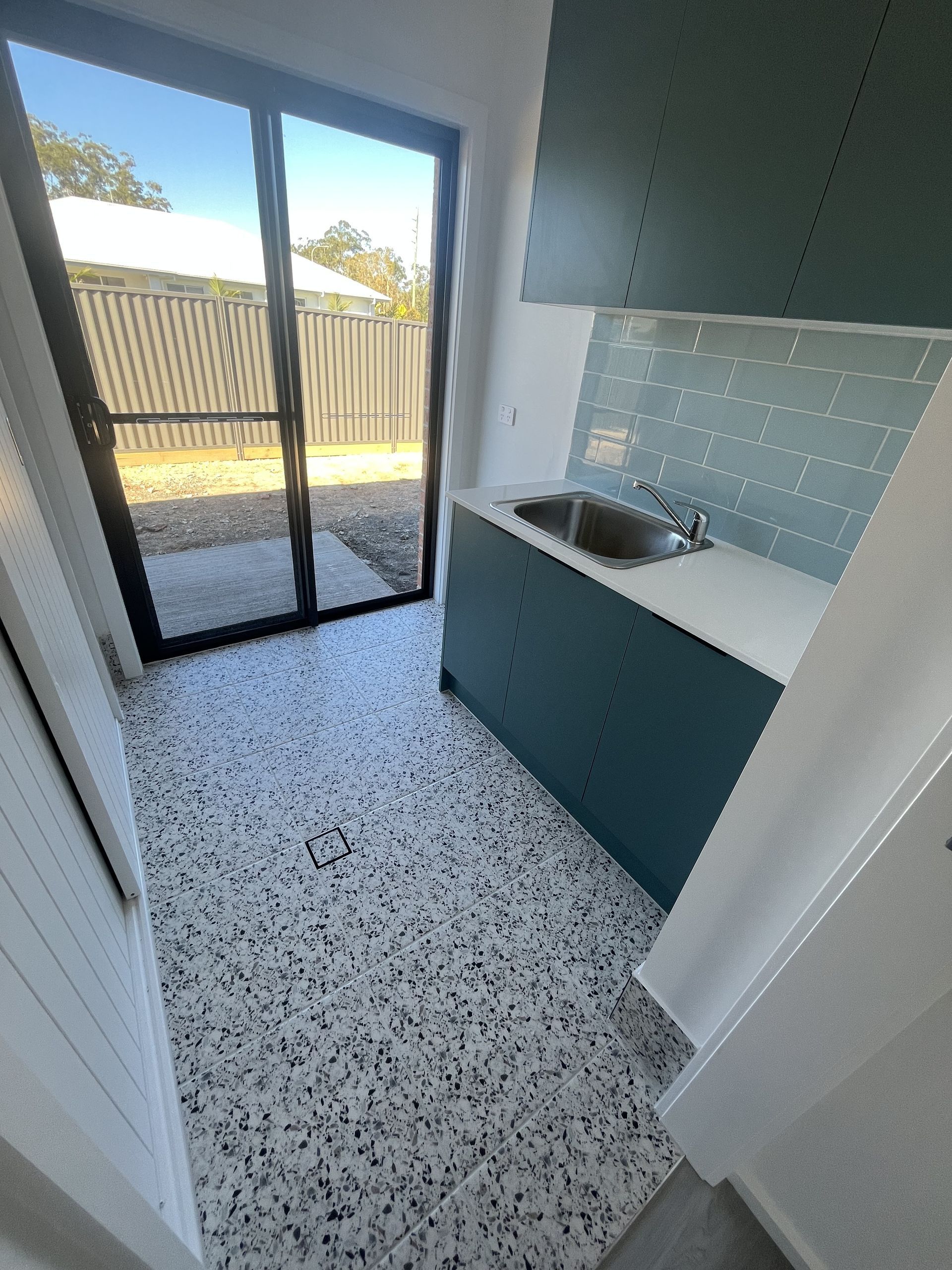
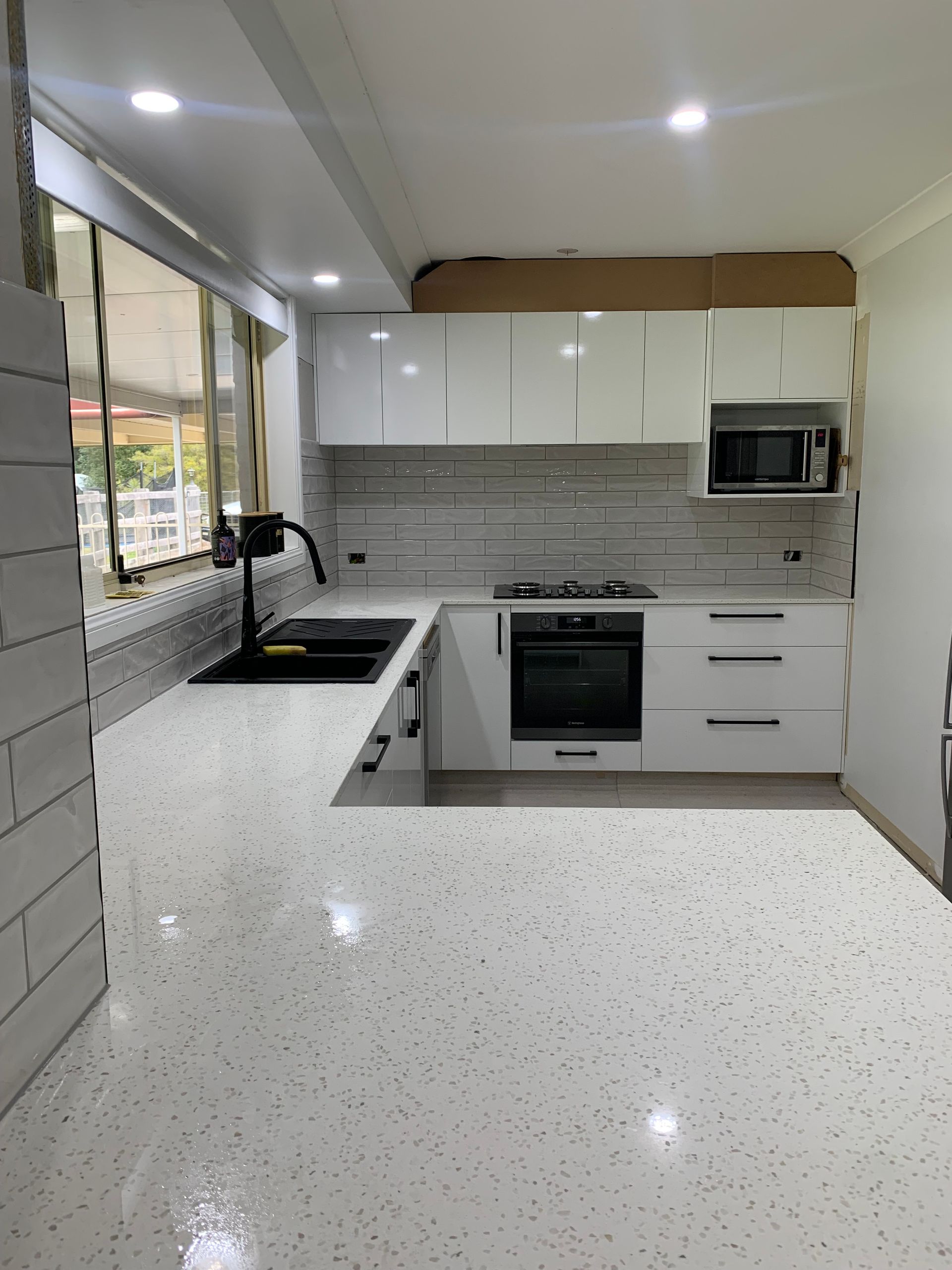
Your Kitchen
Getting the Layout Right First
The placement of a kitchen splashback or floor tile layout is not something that should be worked out on the fly. A well-planned kitchen tiling job starts with understanding the full picture, where the cabinetry sits, how the benchtop edges finish, where power points and rangehoods fall and how natural light moves through the space. All of these factors influence where cuts are made and how the layout is set out before a single tile is fixed. It is the same methodical approach we bring to every bathroom tiling and waterproofing job we take on.
Getting this right upfront avoids awkward cuts at eye level, uneven tile runs along the floor or grout lines that draw the eye for the wrong reasons. In a kitchen where cabinetry, appliances and fittings are all competing for attention, tiles that are set out cleanly and consistently tend to recede into the background in the best possible way, letting the design do the talking rather than the installation.
We take the time to plan each kitchen job properly before work begins so the result looks considered from every angle.



